-2.svg "SD-Trademark-Black-RGB (1)-2")
Multipathing
What is it & What can be done?
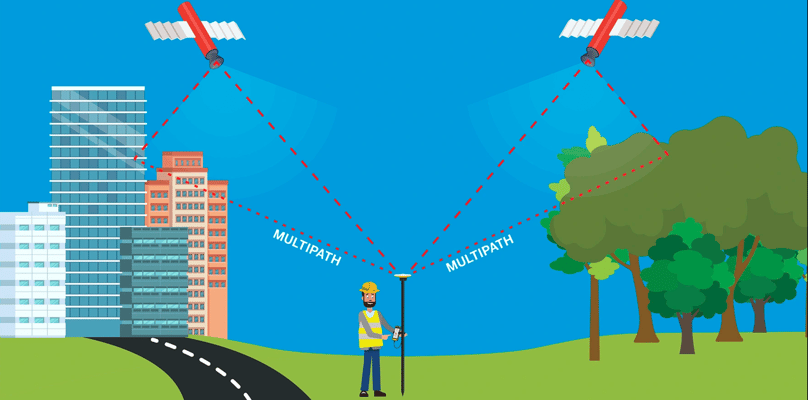
Multipathing in GPS surveys is an issue where satellite signals bounce off surfaces before reaching the receiver, extending the signal's path and causing position calculation errors.
What is it and why it stinks:
This is especially tricky when the GPS receiver is in one place for a long time and there are many things around that the signals can bounce off. This can lead to two types of errors:
- One is predictable and can often be fixed with some adjustments.
- The other is random and unpredictable, making it hard to fix.
This random & unpredictable bouncing can cause so much confusion that the receiver loses track of the satellite signal. Also. It can also add extra noise to the measurements, which can lower the quality of the GPS data.
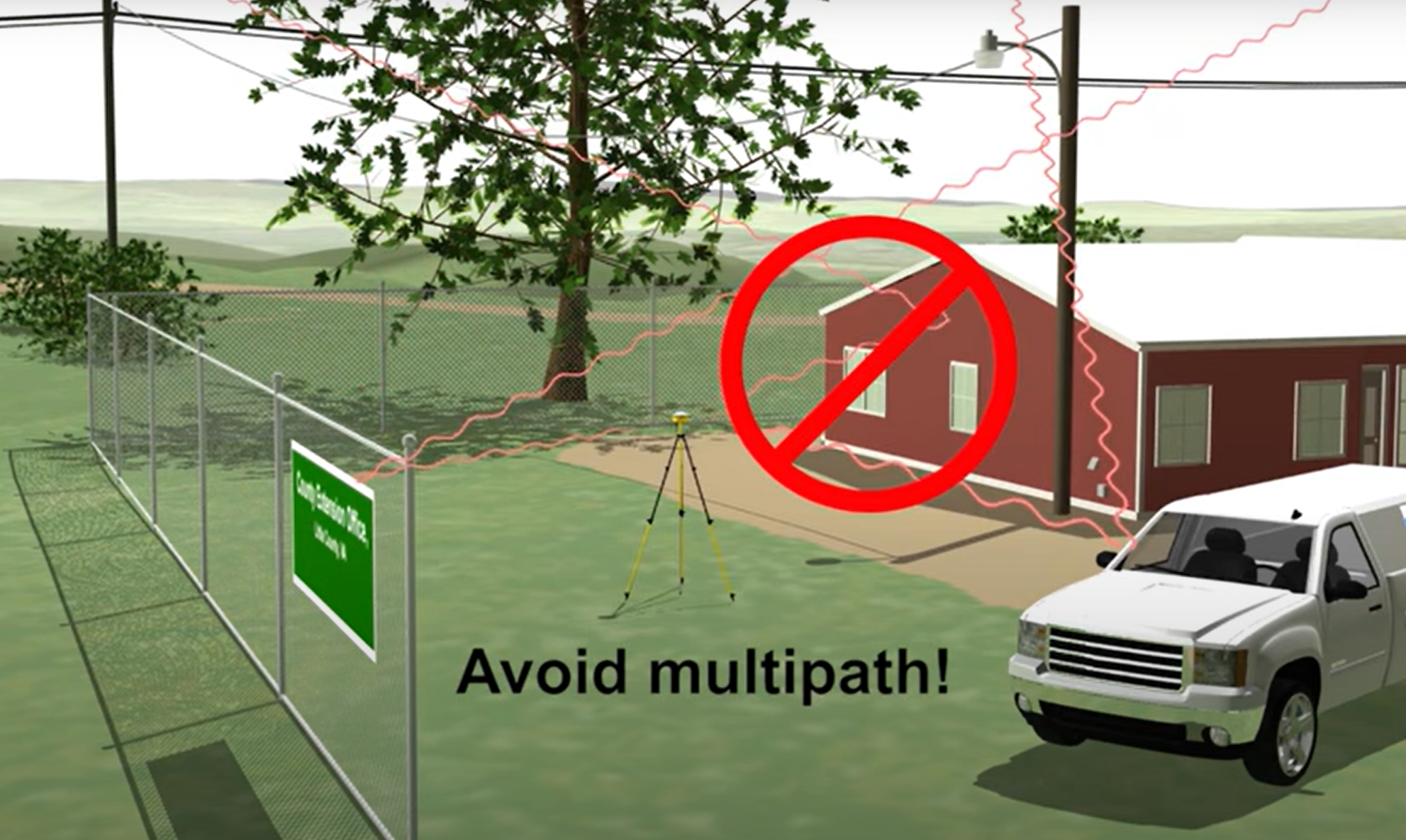
To fix this issue, there are a few things we can do. First, we can be careful about where we place the GPS receiver to avoid areas with lots of things for the signals to bounce off. We can use special antennas that are good at ignoring bounced signals. We can also use smart software that can identify and reduce the effects of these bounced signals.

What Can Be Done?
GPS Placement
Choose a site with fewer reflective surfaces can reduce the likelihood of multipath signals. Antennas should be set up in open areas where possible, and away from buildings, water bodies, and other reflective structures.
Use of specialized antennas
The use of specialized antennas can also help prevent multipath signals. Choke ring antennas are designed to reject signals coming from low elevation angles, which are more likely to have undergone reflection.
Get above the Reflective Objects
One effective way to prevent multipath errors is by using drones for GNSS surveys. When a drone is flown above reflective objects such as buildings or bodies of water, it reduces the chances of satellite signals bouncing off these surfaces before reaching the receiver. This is due to the drone's elevated position, reducing the incidence angle and thus the likelihood of reflection. As a result, the path of the signal stays more direct, which significantly minimizes multipath errors. This approach is especially useful in areas with many reflective surfaces where traditional survey methods may struggle with multipath interference.
GNSS processing software
Advanced GNSS software can download your static observation and identify then mitigate the impact of multipath signals. These can take and filter out the predictable multipath error and use signal processing techniques to improve on the more unpredictable results.
Sources:
Video: EUSPA EU Agency for the Space Programme. (n.d.). What is Multipath? Retrieved from youtube.com/watch?v=IUTM76GLzMI.
We want to know what to teach next.
Tell us what topic or question you want answered in our next Micro Lesson